

You stopped paying weeks ago, and now every unknown number on your phone and every knock at the door sends a jolt of dread. Is today the day someone hands you a lawsuit? The answer catches most people off guard: these cases move far slower than you’d expect, yet the clock that decides everything runs for years, not weeks.
In most cases, a credit card company won’t sue you the moment a payment is late. Legal action usually starts 6 to 12 months after your first missed payment, often after the account is sold to a debt buyer. But here in Ohio, that creditor has up to six years to take you to court. Below is the real timeline, what happens if you’re served, and how Ohioans stop these lawsuits cold.
Key Takeaways
- Expect months, not days. Creditors almost always wait until your account is charged off, roughly six months late, before suing (CBS News, 2025; Achieve, 2025), so many lawsuits land 6 to 12 months after you fall behind.
- Ohio’s deadline is 6 years. Most credit card debt is a written contract, so creditors have six years to sue under Ohio Rev. Code 2305.06.
- You get 28 days to respond. Ignore the lawsuit and the court can enter a default judgment, opening the door to wage garnishment of up to 25%.
- Filing bankruptcy stops it. The automatic stay halts lawsuits and garnishments the day your case is filed.
How Long Before a Credit Card Company Sues You?
Most credit card companies don’t sue until your account is charged off, which happens after about 180 days (roughly six months) of missed payments, and they almost always wait until then to file (CBS News, 2025; Achieve, 2025). In practice, that means many people are sued somewhere between 6 and 12 months after first falling behind.
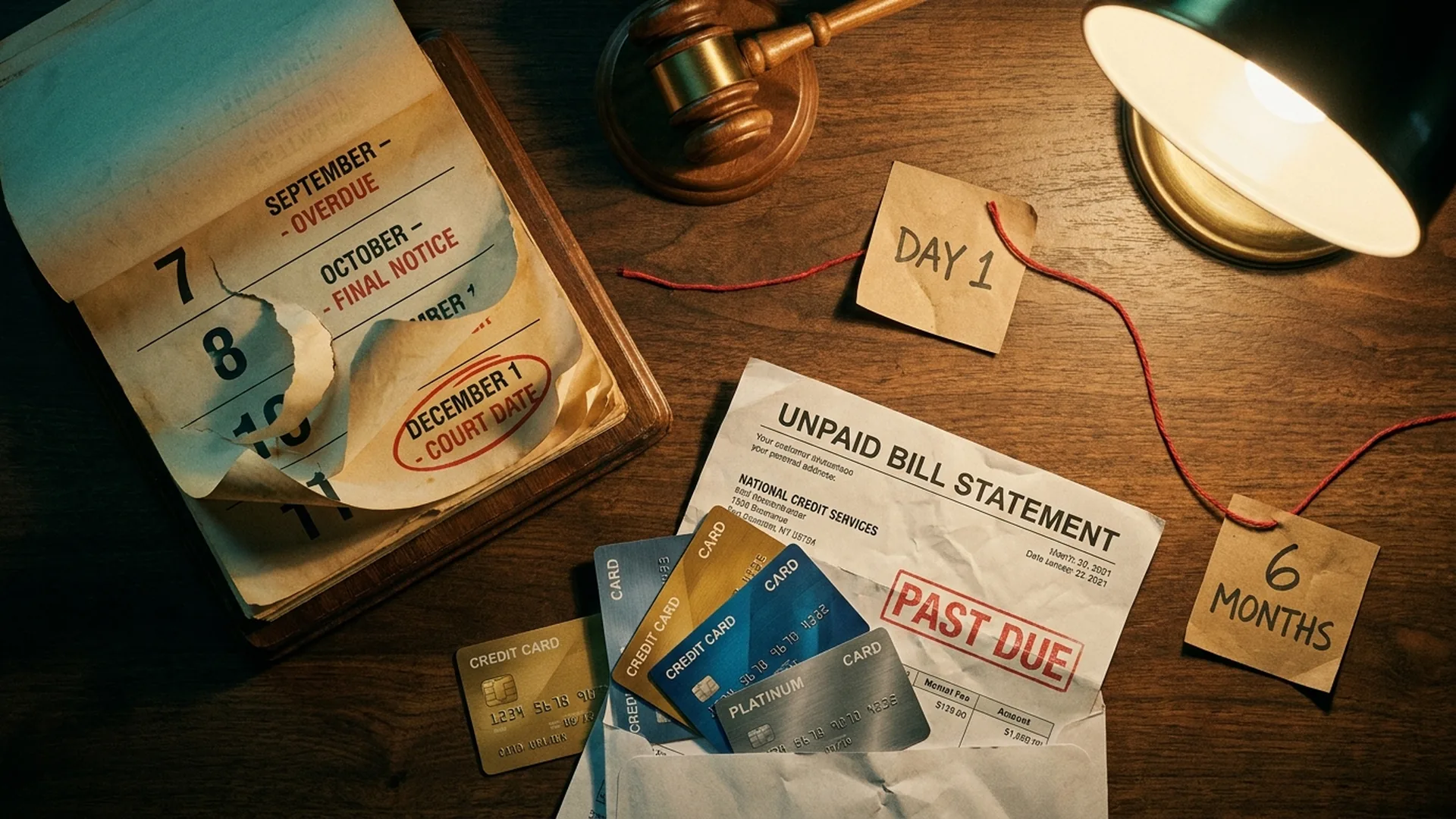
Companies treat litigation as a last resort because it costs them money. They prefer to send letters, make calls, and offer settlements before anyone files anything in court.
That said, “rarely sooner” is not “never.” A larger balance moves faster. There’s no legal minimum you have to owe to be sued, but as a matter of economics, collectors generally don’t bother over balances under $1,000, where litigation costs more than they’d recover. Balances between $1,000 and $5,000 are a gray area, and the odds of being sued rise substantially once a balance climbs past $5,000 (CBS News, 2025).
What Happens Month by Month After You Stop Paying?
After a missed payment, default in Ohio follows a fairly predictable path: late reporting at 30 days, charge-off around 180 days, and a lawsuit most often between months 6 and 12 (Achieve, 2025). Knowing each stage tells you how much time you realistically have to act.
Here’s the catch that trips people up. Even after a charge-off, the debt does not vanish. It’s just an accounting move by the lender. You still owe the balance, and the new owner of that debt can sue you right up until Ohio’s deadline passes.
Want to understand the trade-offs of deliberately falling behind? Read our candid guide on whether you should stop paying your bills before you make that call.
How Long Can You Be Sued in Ohio? The Statute of Limitations
In Ohio, the statute of limitations on most credit card debt is six years, because a cardholder agreement is a written contract under Ohio Rev. Code 2305.06 (Ohio Laws, effective June 16, 2021). That window was actually shortened from eight years by Senate Bill 13, giving Ohioans more protection than they had before 2021.
The statute of limitations is a hard deadline for the creditor, not for the debt itself. Once six years pass from your default, the debt becomes “time-barred.” It still exists, but a court can dismiss any lawsuit filed too late, if you raise the defense.
What Happens If You’re Sued and Ignore It in Ohio?
If you’re served and do nothing, you lose by default. Ohio gives you 28 days to file a written response, called an Answer, after you’re served with the complaint under Ohio Civ.R. 12(A)(1) (Ohio Debt Help / LHA, 2025). Miss that deadline and the creditor asks the court for a default judgment, an automatic win.
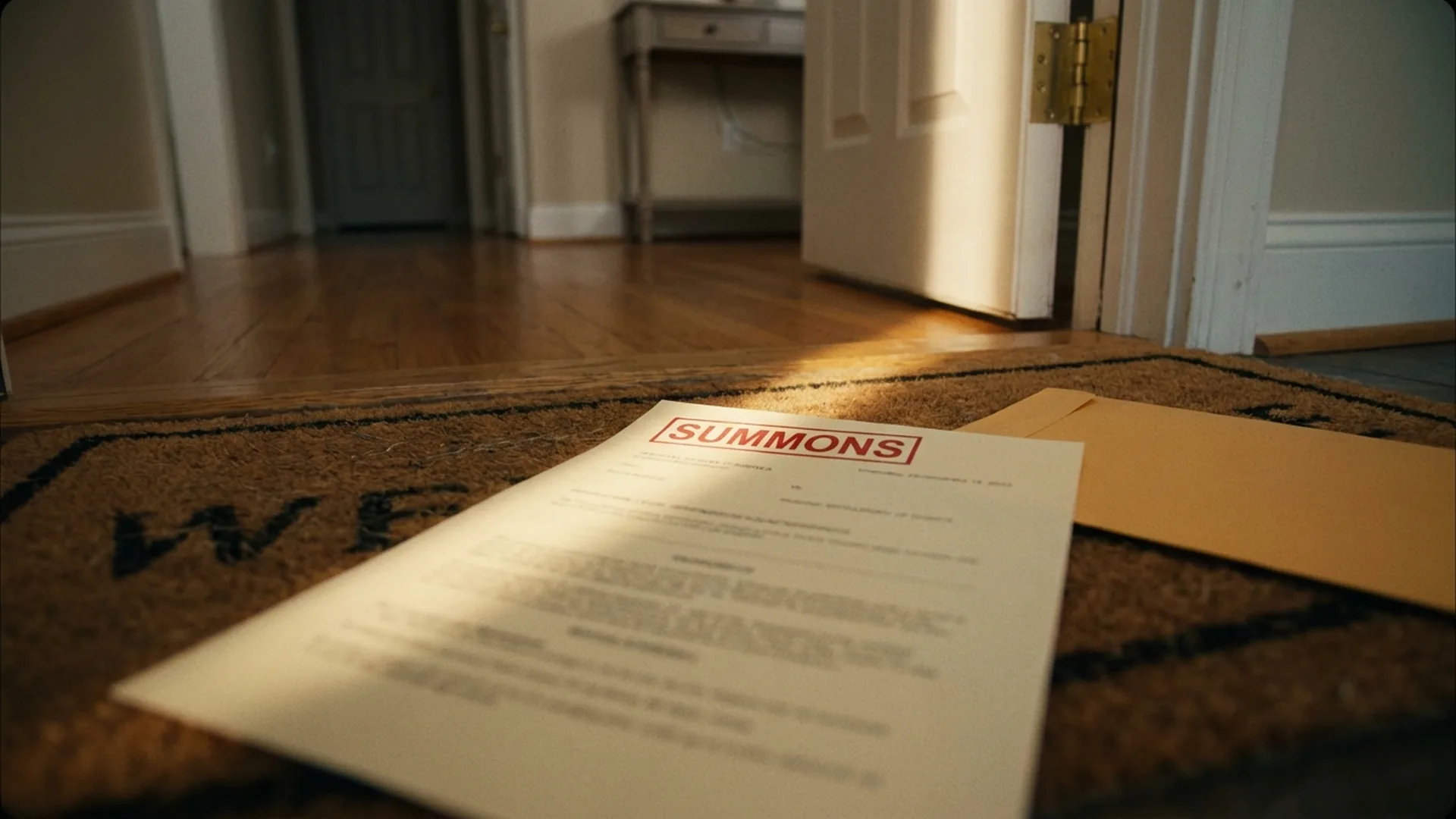
A default judgment is where a manageable problem becomes a crisis. Once a creditor holds a judgment against you, Ohio law lets them pursue collection tools you can’t ignore, and many people only learn this when money disappears from a paycheck.
| Stage | Your window | What’s at stake |
|---|---|---|
| Served with the lawsuit | 28 days to file an Answer | Lose this window, and you risk a default judgment |
| Default judgment entered | Limited time to ask the court to vacate | Creditor can now garnish wages and bank accounts |
| Garnishment begins | Act before the writ is served on your employer | Up to 25% of disposable pay withheld each period |
The single most important thing? Never ignore a summons. Even if you owe every penny, responding on time preserves defenses, forces the creditor to prove the debt, and keeps settlement and bankruptcy options open. Our guide to bankruptcy mistakes to avoid covers the errors that cost Ohio families the most.
Can They Garnish My Wages or Take My Property in Ohio?
Yes, but only after they win a judgment, and Ohio caps how much they can take. Under federal and Ohio law, a creditor with a judgment can garnish up to 25% of your disposable earnings each pay period (U.S. Department of Labor, Fact Sheet #30; Ohio Rev. Code Chapter 2716). Disposable earnings are what’s left after legally required deductions like taxes.

Wages aren’t the only target. With a judgment in hand, a creditor can also attach money in your bank account through non-wage garnishment. The good news: Ohio exemptions protect certain property and a portion of your assets, and several income sources, like Social Security, are generally off-limits to ordinary creditors.
Already seeing money pulled from your paycheck? Read what to do when you’re facing garnishment in Ohio, including how filing can stop it.
How Do You Stop a Credit Card Lawsuit Before It Starts?
You have more bargaining power than the collection letters suggest. Most Ohioans facing a credit card lawsuit have three realistic paths: negotiate a settlement, defend the lawsuit on the merits, or file bankruptcy to wipe the debt out entirely. The right move depends on how much you owe and what you can afford.
Bankruptcy is often the most decisive option because of one powerful tool. The moment you file, an automatic stay under Section 362 of the U.S. Bankruptcy Code takes effect, immediately stopping collection lawsuits, wage garnishments, and creditor calls (United States Courts). A pending lawsuit doesn’t just pause. For dischargeable credit card debt, it’s wiped out.
Your Main Options at a Glance
- Chapter 7 bankruptcy: Wipes out qualifying credit card debt in a matter of months. See our guide to Chapter 7 bankruptcy in Ohio, and check whether you qualify with the Ohio means test calculator.
- Chapter 13 bankruptcy: Reorganizes debt into an affordable payment plan while protecting your home and car. Learn more about Chapter 13 in Ohio.
- Settlement or defense: Sometimes the smartest move is negotiating or making the creditor prove the debt. Explore your credit card debt options.
Worried a Credit Card Lawsuit Is Coming?
Don’t wait for the summons. Find out exactly where you stand. Every consultation is free, and there’s no pressure and no catch.
Frequently Asked Questions
At What Point Will a Credit Card Company Sue You in Ohio?
Most credit card companies wait until your account is charged off, about 180 days (six months) of missed payments, before suing, and rarely file sooner (CBS News, 2025; Achieve, 2025). In practice, many lawsuits land 6 to 12 months after you fall behind. In Ohio, they can file any time within the six-year statute of limitations under Ohio Rev. Code 2305.06.
Can a Credit Card Company Sue You After 6 Years in Ohio?
Generally no. Most credit card debt in Ohio is a written contract with a six-year statute of limitations (Ohio Rev. Code 2305.06). After that, the debt is “time-barred,” but you must raise the expired deadline as a defense, or a judgment can still be entered.
What Happens If I Ignore a Credit Card Lawsuit in Ohio?
You have 28 days to file an Answer after being served (Ohio Civ.R. 12(A)(1)). Ignore it, and the court can grant a default judgment, allowing the creditor to garnish up to 25% of your disposable wages and attach your bank account.
How Much of My Paycheck Can Be Garnished in Ohio?
A judgment creditor can garnish up to 25% of your disposable earnings each pay period under Ohio Rev. Code Chapter 2716 and federal law (U.S. Department of Labor, Fact Sheet #30). Disposable earnings are wages remaining after legally required deductions.
Does Filing Bankruptcy Stop a Credit Card Lawsuit?
Yes. Filing triggers an automatic stay under Section 362 of the U.S. Bankruptcy Code, which immediately halts lawsuits, garnishments, and collection calls (United States Courts). Dischargeable credit card debt is then eliminated, ending the lawsuit for good.
The Bottom Line
Stopping credit card payments rarely brings an instant lawsuit. But it starts a clock that runs for years in Ohio. You’ll typically have 6 to 12 months before legal action, a six-year deadline hanging over the debt, and just 28 days to respond once you’re actually served.
The worst outcome isn’t being sued. It’s being sued and doing nothing. Whether the right answer is settlement, a defense, or wiping the debt out through bankruptcy, the sooner you act, the more options you keep. Richard West has helped over 30,000 Ohio families get a fresh start since 1986, and we’d be glad to review yours, free.
Get a Clear Plan for Free
See every option for your situation in one honest conversation. No high pressure, ever.
Sources
- CBS News, “When do credit card companies sue for non-payment?”, retrieved 2026-06-26, cbsnews.com
- CBS News, “How much will a debt collector take you to court over?”, retrieved 2026-06-26, cbsnews.com
- Achieve, “When can a credit card company sue you?”, retrieved 2026-06-26, achieve.com
- Ohio Laws & Administrative Rules, “Section 2305.06 | Contract in writing” (effective June 16, 2021), retrieved 2026-06-26, codes.ohio.gov
- Ohio Laws & Administrative Rules, “Section 2305.06 | Contract in writing” (prior version effective September 28, 2012, showing the eight-year period), retrieved 2026-07-29, codes.ohio.gov
- Ohio Laws & Administrative Rules, “Section 2305.07 | Contract not in writing”, retrieved 2026-06-26, codes.ohio.gov
- Luftman, Heck & Associates (OhioDebtHelp), “Default Judgment in Ohio”, retrieved 2026-06-26, ohiodebthelp.com
- U.S. Department of Labor, “Fact Sheet #30: Wage Garnishment Protections of the CCPA”, retrieved 2026-06-26, dol.gov
- Ohio Laws & Administrative Rules, “Chapter 2716 | Garnishment”, retrieved 2026-06-26, codes.ohio.gov
- United States Courts, “Chapter 7 Bankruptcy Basics” (automatic stay, 11 U.S.C. 362), retrieved 2026-07-29, uscourts.gov
This article is general legal information for Ohio residents, not legal advice, and does not create an attorney-client relationship. Statutes of limitations and deadlines can vary based on your specific facts and the type of debt. For advice about your situation, contact Richard West Law Office for a free consultation.